

The world’s most unequal treaty is also its most successful: the bomb stays with the few, and the rest are told to trust the system. Until when?
The Treaty on the Non-Proliferation of nuclear weapons (NPT)[1] was signed in 1968 by the United States, the U.K., the USSR, and 59 other states. The idea behind this treaty was simple: the nuclear armed powers agreed not to share them, and the rest agreed not to develop them. In return, nuclear powers promised to help others access nuclear technology but only for peaceful purposes (energy). By 1995, the treaty was extended indefinitely and nowadays, 191 states have signed it except, India, Pakistan and Israel. North Korea has signed the Treaty but abandoned it in 2003 when it decided to develop its own nuclear weapons.
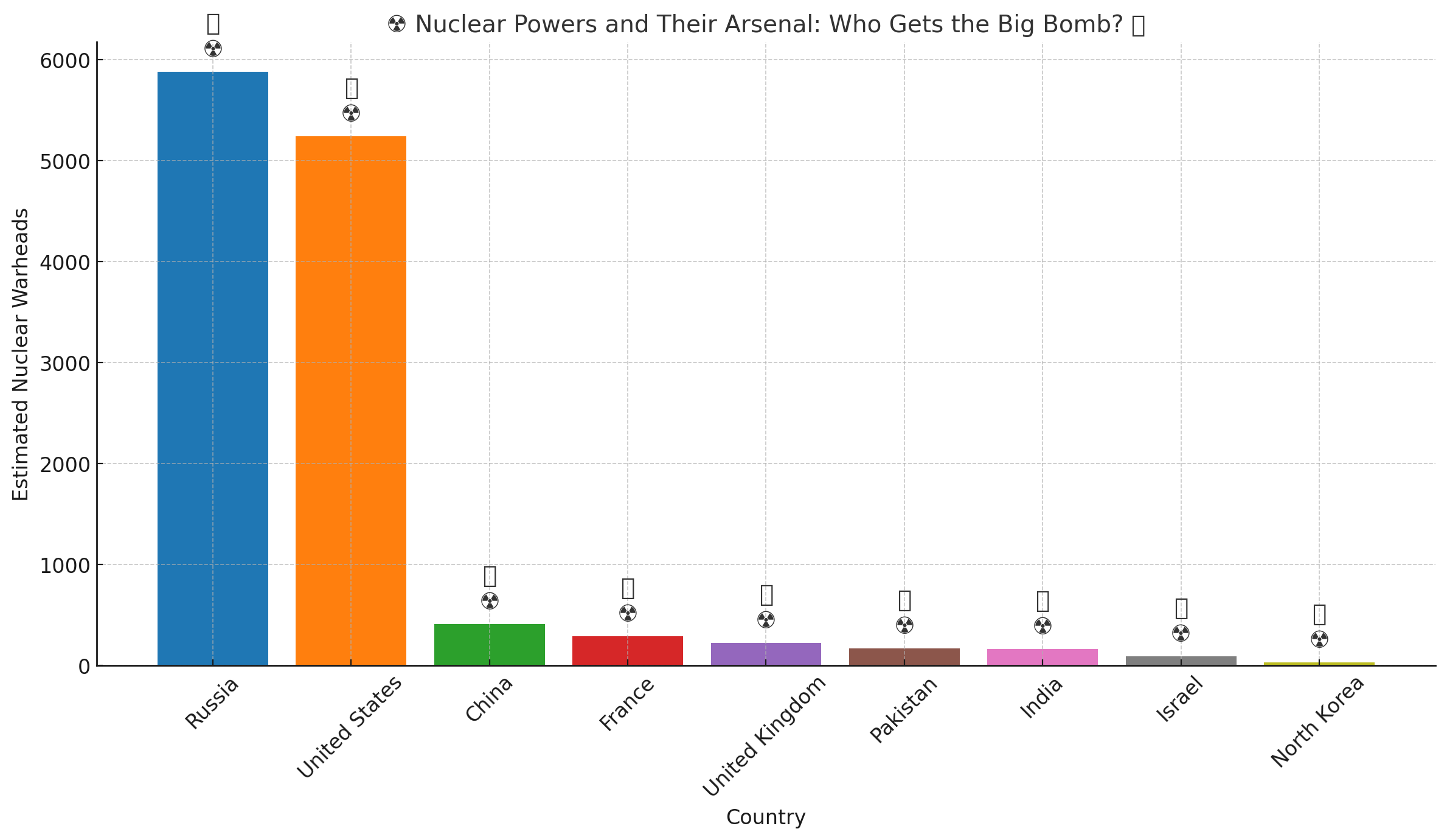
The Treaty is still the most widely adopted arms control agreement in the world even though it is openly unequal. As we mentioned above, only a handful of states get to keep their nuclear weapons, while the rest of the world is legally blocked from ever developing one. That arrangement has worked for many decades, mostly because non-nuclear states couldn’t afford the development of nuclear weapons.
However, since the Cold War the world has changed significantly. For states like Iran, North Korea, and Pakistan, the objective is clear: if you want to survive (the regime), you need the bomb. If you need to matter regionally, and even globally, you need not just nuclear energy but nuclear weapons. In other words, if you do not have nuclear weapons, you are vulnerable - if you do you are untouchable.
The NPT does not stop the pursuit of nukes. On paper, it promotes disarmament but in reality, the nuclear powers have not given up their arsenal. Instead of disarmament, they have modernized their nuclear capabilities and raised the bar for anyone trying to catch up. Nonetheless, the NPT has helped create nuclear-weapon-free zones in regions like Latin America, Africa, and Southeast Asia. Furthermore, there are also bans on nukes in outer space, on the seabed, and even the Moon. But none of those bans apply to places where things are heating up like the Middle East.
Why This Matters Now
Fast forward to the present day. The latest round of Israeli airstrikes on Iran’s nuclear sites and senior military officials, and Iran’s direct retaliation, did not come out of nowhere. This conflict has been brewing for decades, and the NPT is part of the story.
Israel has never signed the treaty, and it has never been admitted it has nuclear weapons. However, is widely accepted that Israel has some nuclear heads already. That unspoken fact gives Israel enormous leverage in the Middle East. It doesn’t just deter attacks; it reshapes the entire strategic map. Iran continues to test the limits of the international system, using its civilian nuclear program as cover while inching toward weapons capability, a pattern that rightly triggers defensive responses from Israel and the international community.
One country has the power to set the rules; the other does not. For Israel, a nuclear-armed Iran is not just a threat but an unacceptable risk. Its military responses are preemptive defense which is a necessary posture in a region where hesitation can be fatal.
Iran lacks the capacity to hit back in any way that seriously shifts the balance. Its retaliatory strikes were more symbolic than strategic even though they caused severe damage. Precision Israeli airstrikes, meanwhile, punched through Iranian defenses and hit core infrastructure.
This is not about international law or even morality. It is about power. Israel can act to protect itself because it has the military, diplomatic, and intelligence capabilities, and because its closest ally, the United States, will support it. Iran, by contrast, does not have a security umbrella. It cannot shape global narratives and as the global community witnessed, it couldn’t control its own airspace.
The Real Game
At the heart of the NPT, and the Israel–Iran standoff, is a truth: nuclear weapons are about who gets to make the rules. The treaty wasn’t designed to make the world equal. It was designed to manage inequality. And in the current moment, it’s doing exactly that.
What we witnessed in the Middle East was not just a regional dispute. It was a hard lesson in global order. Eventually, it is not about double standards but who has real power: States with nuclear weapons, or even the shadow of them, move differently. They deter, they dictate, and they define the lines others can’t cross. Those without them live under that ceiling. And every time the system is challenged, by Iran, North Korea, or anyone else, it becomes painfully obvious who has the power, and who has not. It is not about peace, international law, or even nuclear weapons. It is all about power: who controls it, and who pays the price for trying to claim it.