

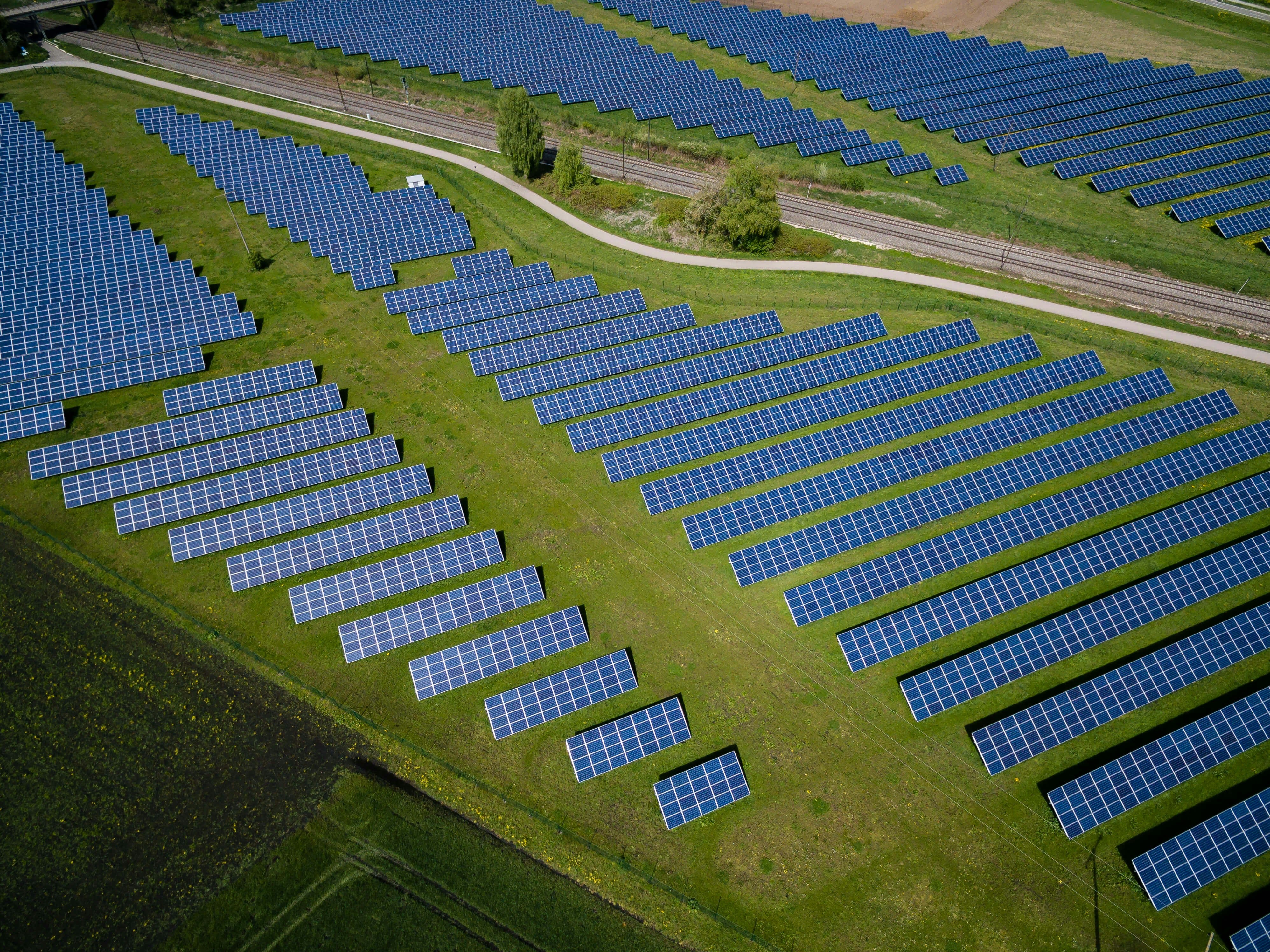
Photo by Andreas Gucklhorn
Our modern industrialized world has thrived in the last 100 years on a simple assumption: energy would be endless, cheap and secure. Obviously, this is not the case anymore. The concept of climate change, economic, political and social instability, wars and decarbonization efforts have been forcing nations into a complex transition. What comes next is not merely a technological shift, but a geopolitical transformation with consequences that will reverberate from the Persian Gulf to the Arctic Circle.
Modern society has staked its future on energy. For decades, the prosperity of the industrialized world was secured by the steady availability of fossil fuels, and we behaved as if these resources were inexhaustible. The abundance and characteristics made them easy to store and capable of delivering large amounts of energy efficiently and consistently. However, the urgent need to reduce emissions and environmental impact, together with various geopolitical factors, has led in recent years to restrictions on their availability and use.
Armed conflicts and political crises have repeatedly exposed the vulnerability of global fuel supplies. At the same time, societies have become aware of the environmental consequences of our dependence on fossil fuels. The era of fossil fuels as an energy source is coming to an end. As states are struggling to achieve the long-term objective of net-zero carbon emissions, renewable energy sources are poised to reshape the geopolitical landscape. Unlike oil and natural gas, electricity is traded regionally. Over the last 15 years, solar and wind power have experienced exponential growth, from being almost nonexistent to contributing 15% of the world’s electricity generation. At the same time, solar panel prices have dropped by as much as 90%.
Nevertheless, during the energy transition period, ensuring supply security, affordability and sustainability are simultaneous objectives. However, during periods of economic downturn, sustainability frequently becomes a secondary priority. A combination of affordability and security, facilitated by energy access, ensures a sufficient supply at reasonable prices.
That said, the transition to another stage of energy will be challenging while we have already been experiencing the effects. The development of an industrial sector that is solely dependent on renewable energy is more costly and technically challenging. For this reason, natural gas is set to remain a pivotal component of the energy landscape, given its status as the fossil fuel with the lowest greenhouse gas emissions, provided these emissions are effectively managed.
However, even under the most optimistic circumstances, the rate of decline in the production of the world’s current stock of natural gas wells is faster than the projected decline in demand. Given that oil and gas currently account for 55% of the world’s energy supply and success depends on preserving access to reasonably priced energy both now and during the energy transition, sustained investment is fundamentally necessary.
In the aftermath of the transition phase, hydrogen is expected to be the most promising alternative to traditional fossil fuels, offering a clean and sustainable source of energy. However, one of the major challenges in promoting widespread adoption of hydrogen is its efficient transportation and storage. Fortunately, existing natural gas infrastructure allows for the integration of hydrogen into the existing energy system, leveraging the extensive network of pipelines. While certain modifications and safety measures are necessary, repurposing natural gas infrastructure offers a cost-effective and environmentally friendly approach to hydrogen transport.
Investment and trade in hydrogen will have a significant impact on bilateral relations, leading to the establishment of new interdependency patterns. The production of green hydrogen may have significant geopolitical and economic implications for nations with a surplus of inexpensive renewable energy. In a world of expanding export markets and diversifying economies, hydrogen can present a viable alternative for exporters of fossil fuels.
Another critical aspect of the transition to renewable energy sources is the supply chain, which faces significant challenges particularly regarding rare earth elements and critical minerals that are necessary for batteries and other green technologies.
Resource security and geopolitical dynamics are among the challenges that have been shown to arise, because of these materials’ relative scarcity, geographic concentration of production and processing in a few countries and growing demand. For both producing and consuming countries, the vulnerabilities and uncertainties created by this concentration may affect the adoption, cost, and sustainability of energy transition technologies, while concerns have been expressed about possible manufacturing and supply bottlenecks and interruptions that will lead to serious geopolitical repercussions.
Meanwhile, most of the maritime trade related to energy is expected to involve hydrogen, synthetic fuels, biomass, and renewable energy technologies such as batteries and photovoltaics. This shows that energy dependence can be reduced but not completely eliminated, as it will change form. However, this reform in conjunction with other geopolitical factors and disruptions to international shipping could reshape global maritime networks and alter the landscape of world trade.
Finally, in this context, the energy transformation driven by renewables could lead to partially decentralized energy systems and a dispersion of power, empowering new actors. This shift from global markets to regional networks will occur as countries that currently import oil from the other side of the world will seek to develop renewable sources and connect their networks to those of neighboring markets. Distributed renewable electricity generation can provide a first step on the development ladder and improve the quality of life of the world’s poorest at a reasonable cost, especially if combined with batteries or backup fossil-fuel capacity to manage intermittency. Especially, the countries in the Global South intend to utilize their natural resources to promote economic growth and reduce their reliance on traditional energy imports, thus expanding the renewable energy market in the region. These shifts could transform the global energy landscape and alter the traditional power dynamics that have favored countries which traditionally relied on exporting gas and oil and now are facing significant challenges in the current geopolitical environment.
Author Bio
*Dimitrios-Periklis Giannoulis graduated from the Hellenic Air Force Academy and holds a PhD in Multiphase Flows from the University of Patras. He works as an aircraft maintenance manager. His role involves organizing and supervising the service, repair and periodic maintenance of aircraft and jet engines and developing process improvements for maintenance activities. His research activities include CFD engineering applications, underwater oil and natural gas leaks, alternative aviation and marine fuels.
Bibliography
Pepe, Jacopo Maria, Dalia Ansari, and Robert M. Gehrung. The Geopolitics of Hydrogen Technologies, Actors, and Scenarios until 2040. SWP Research Paper no. 13. Berlin: German Institute for International and Security Affairs (SWP), November 16, 2023.
https://www.swp-berlin.org/publications/products/research_papers/2023RP13_GeopoliticsHydrogen.pdf.
Srinivasan, Sree, Christopher Robinson, Simon Blakey, Claire Mauduit-LeClercq, Julien Bernu, CFA, and Anastasia Pantazopoulou. Hydrogen: New Ambitions and Challenges—Is Low-Carbon Hydrogen Ready for Lift-Off? S&P Global, February 15, 2024.
https://www.spglobal.com/en/research-insights/special-reports/look-forward/hydrogen-new-ambitions-and-challenges.
Finley, Mark, and Samantha Gross. “Navigating Market and Political Uncertainties in the Age of Energy Transition.” Brookings Institution, March 11, 2025.
https://www.brookings.edu/articles/navigating-market-and-political-uncertainties-in-the-age-of-energy-transition/.
International Renewable Energy Agency (IRENA). A New World: The Geopolitics of the Energy Transformation. Abu Dhabi: IRENA, 2019.
https://www.irena.org/-/media/Files/IRENA/Agency/Publication/2019/Jan/Global_commission_geopolitics_new_world_2019.pdf.
United Nations Economic Commission for Europe (UNECE). Technology Brief: Hydrogen. Geneva: UNECE, August 31, 2022.
https://unece.org/sites/default/files/2022-08/Hydrogen%20brief_EN_final.pdf.