

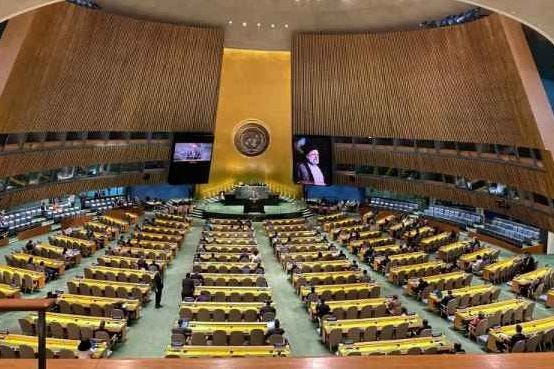
Photo: UN General Assembly Hall / UN Photo
Executive Summary
The international system has entered the face of strategic competition between the great powers which is translated in structural instability. The later is characterized by declining predictability, uneven power and the progressive disbelief in the rule of law. This transformation does not constitute a stable transition toward multipolarity but instead, it reflects a condition of competitive disorder where power politics multiply and at the same time the institutional constraints lose their effect.
Regarding middle and smaller powers, this context generates asymmetric risks. The common characteristic of these aforementioned states is that they lack the capabilities to shape systemic outcomes in accordance with their interests. Consequently, they are vulnerable to shifts in global security , finance, energy, trade and technological governance. Due to their limited power, they seek to anchor their national security and prosperity in international institutions and alliances. However, in the current era of great power competition such mechanisms are not sufficient.
This report evaluates the principal risks facing small and middle powers over the 2026–2035 horizon. It draws on a realist understanding of international politics that emphasizes anarchy, survival, and power asymmetries, while integrating institutional and economic evidence from NATO, the European Union, the United States, the International Monetary Fund (IMF), the World Bank, SIPRI, IISS, RAND, and other authoritative sources. The analytical framework is influenced by Professor Panagiotis Ifestos’ long-standing argument that systemic anarchy never disappeared and that periods of apparent stability merely masked underlying power realities.
The core judgment of this report is that the margin for strategic error for middle and small powers is narrowing. In a system where coercion increasingly replaces persuasion, and where great powers selectively apply rules, states that fail to invest in their strategic capacity, political, military, economic, and cognitive, will experience declining autonomy and heightened exposure to external shocks.
Key findings:
Coercive diplomacy and grey-zone pressure against middle and small powers is rising.
The alliances are still necessary but they are becoming increasingly conditional and interest driven.
International Institution are no longer secure protection.
Strategic passivity has high long term risks.
The consequences of strategic inaction are real as they include a progressive loss of decision-making freedom, economic vulnerability, and increased susceptibility to security crises triggered by external actors.