

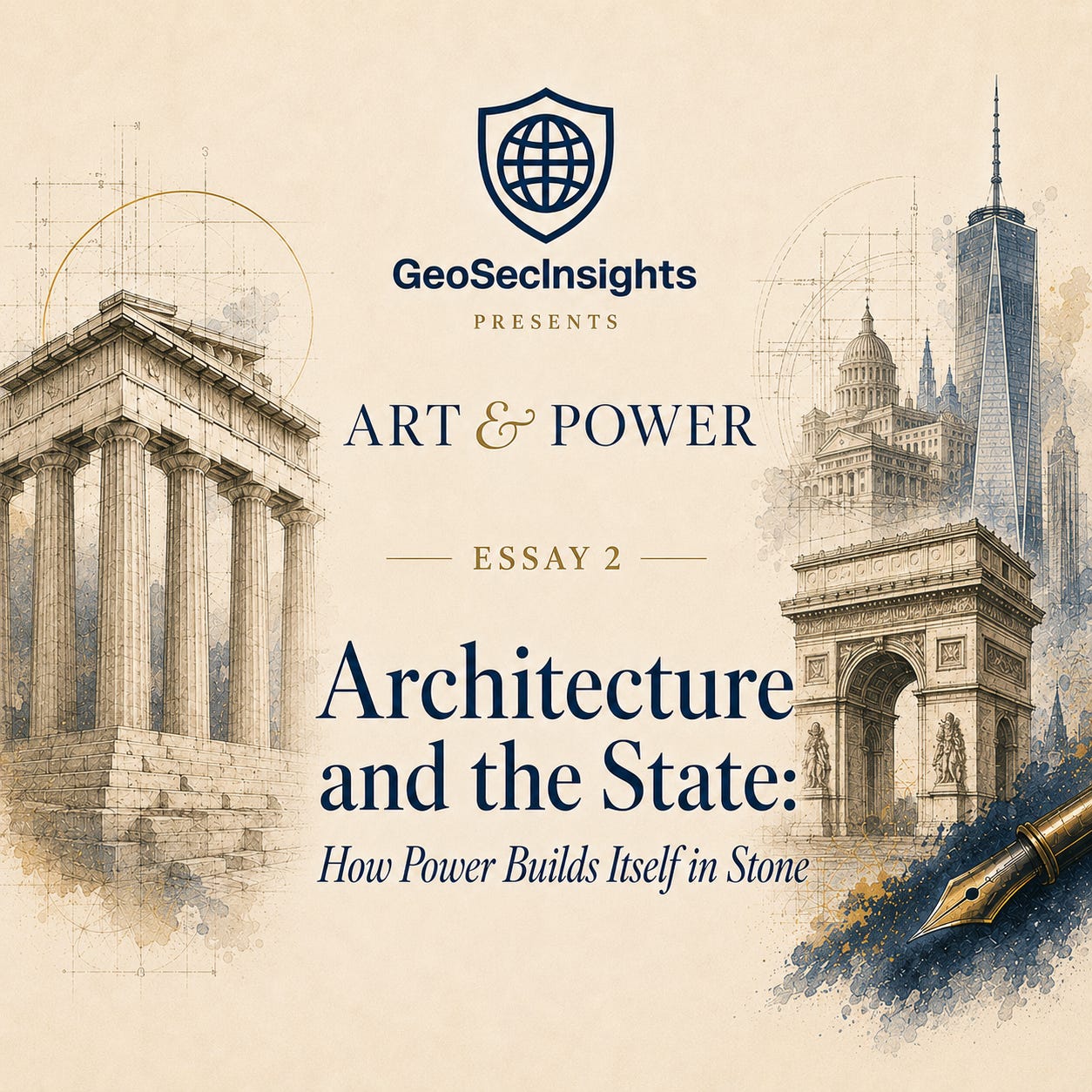
Power shapes space through architecture.
Introduction
If art gives form to political imagination, architecture is perhaps its most visible expression. Buildings serve practical needs, but they also organize space, shape memory, and teach people how to experience power. A palace, a parliament, a temple, a triumphal arch, a monument, a skyscraper, a train station, an airport, or a government square speaks before anyone says a word. Our buildings and our cities are statements telling people where authority lives, how it wants to appear, what kind of emotions it wants to produce, and what kind of story a society wants to talk about itself.
Architecture is power made visible. From the beginning of organized political life, rulers understood that power needed physical form. Laws could command obedience, armies could enforce order, and wealth could sustain authority, but buildings gave power permanence. They made it appear stable, sacred, and almost natural. A ruler may die, a dynasty may collapse, a regime may change, but the structure often remains. This is why architecture has always been one of the favorite languages of power: it survives longer than speeches, and it speaks loudly even when nobody is speaking.